Metric vs Imperial: A Practical Guide
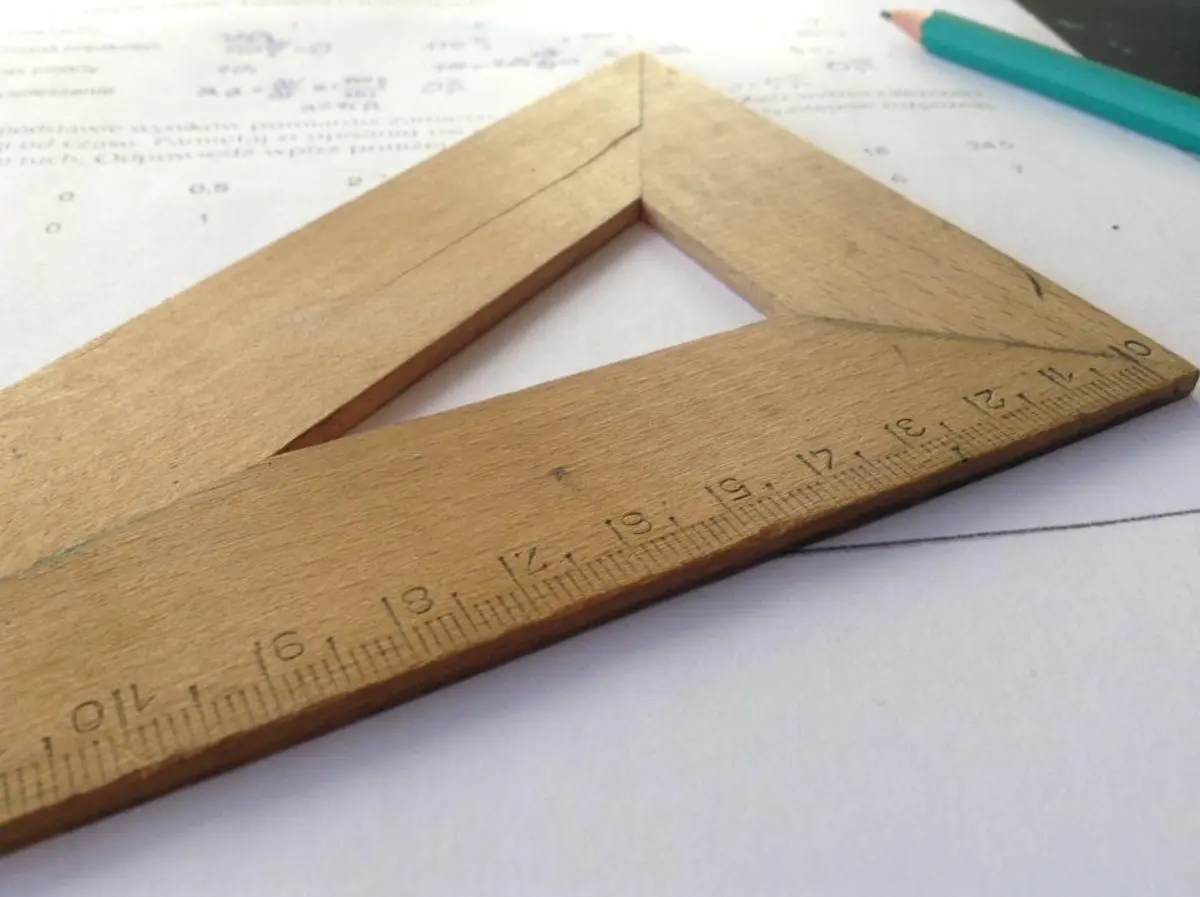
If you have ever bought a "6-foot" sofa online only to receive dimensions in centimetres, you already know the friction between the metric and imperial systems. They measure the same physical world, but with different base units and different logic. Understanding how each is built makes converting between them far less error-prone.
How the metric system is built
The metric system — formalized today as the International System of Units (SI) — is decimal. Every step between units is a power of ten, signalled by a prefix: kilo- means a thousand, centi- a hundredth, milli- a thousandth. A kilometre is 1000 metres, a centimetre is one hundredth of a metre, a milligram is one thousandth of a gram. Because everything scales by tens, converting within the system is just moving a decimal point.
This regularity is why science, medicine and most of the world's trade run on metric units. Once you know one prefix, you know it everywhere — kilobytes, kilograms and kilometres all share the same thousandfold logic.
The imperial and US customary units
The imperial system (and the closely related US customary system) grew from historical, human-scale measures: the inch, the foot, the yard, the mile. Their relationships are not decimal — 12 inches to a foot, 3 feet to a yard, 1760 yards to a mile — so conversions inside the system require memorizing awkward ratios. Weight follows the same pattern: 16 ounces to a pound, 14 pounds to a stone.
Confusingly, the imperial and US systems agree on length but not on volume: an imperial gallon is about 4.55 litres, while a US gallon is about 3.79 litres. When a recipe or spec sheet says "gallon", it is worth knowing which one is meant.
Converting between them
The anchor conversions worth remembering are simple: one inch is exactly 2.54 centimetres, one mile is about 1.609 kilometres, one pound is about 0.454 kilograms, and one US gallon is about 3.785 litres. From these, everything else follows. Rather than memorizing dozens of ratios, let a converter hold the exact factors — UnitBook stores each unit relative to a metric base, so cross-system conversion is a single, precise step.
Units without artefacts: the 2019 redefinition
For most of its life the metric system leaned on physical objects. The kilogram was a platinum-iridium cylinder kept outside Paris, and its official copies had drifted away from it by tens of micrograms over a century. In May 2019 the SI was redefined so that every base unit derives from a fixed constant of nature instead, and the Planck constant was set to exactly 6.62607015 × 10⁻³⁴ joule-seconds — which is now what defines the kilogram.
The metre made that move much earlier. Since 1983 it has been the distance light travels in a vacuum in 1/299 792 458 of a second, because the speed of light is a defined number rather than a measured one. The second underpins both of them: it is 9 192 631 770 periods of the radiation from a particular hyperfine transition in caesium-133.
For everyday conversion this changes nothing numerically — a kilogram still weighs what it always did. What it changes is reproducibility: any properly equipped laboratory can now realise the unit from first principles, with no reference object to age, be damaged or be lost.
Imperial units are defined in metric terms
It surprises people, but imperial units have had no independent definition since the international yard and pound agreement of 1959. One inch is exactly 25.4 millimetres and one pound is exactly 0.45359237 kilograms — exact by definition, not rounded approximations. Every inch-to-centimetre conversion you will ever do is therefore exact arithmetic rather than a measurement.
Volume is where the two English-speaking systems still part company. A US gallon is 3.785411784 litres and an imperial gallon is 4.54609 litres, a 20% gap. A US pint holds 16 fluid ounces while an imperial pint holds 20, and the fluid ounces themselves differ: 29.57 mL in the US against 28.41 mL in the UK. The US survey foot, which differed from the international foot by about two parts per million, was finally retired at the end of 2022.
In practice only three countries have not adopted the metric system for general use: the United States, Liberia and Myanmar. Even that understates the mixing. Britain signs its roads in miles and sells draught beer in pints while weighing groceries in grams, and Canada forecasts in Celsius while its building trade still works in feet and inches.
The takeaway
Metric scales by tens with shared prefixes; imperial uses fixed historical ratios. Remember a handful of anchor conversions (2.54 cm per inch, 1.609 km per mile) and let the converter handle the rest.
Convert units and run the calculators — free and offline.
More guides
Temperature Scales: Celsius, Fahrenheit, Kelvin
Temperature does not convert like length. Learn why it needs an offset, not just a multiplier, and how the three common scales relate.

Data Units: KB vs KiB, and Why Disks Look Smaller
A "1 TB" drive shows up as roughly 931 GB — because there are two competing definitions of the kilobyte. How binary and decimal units differ.
Cooking Conversions: Cups, Grams and Millilitres
Recipes mix volume and weight, cups and grams, US and metric. Here's how to convert kitchen measurements — and why weighing beats scooping.